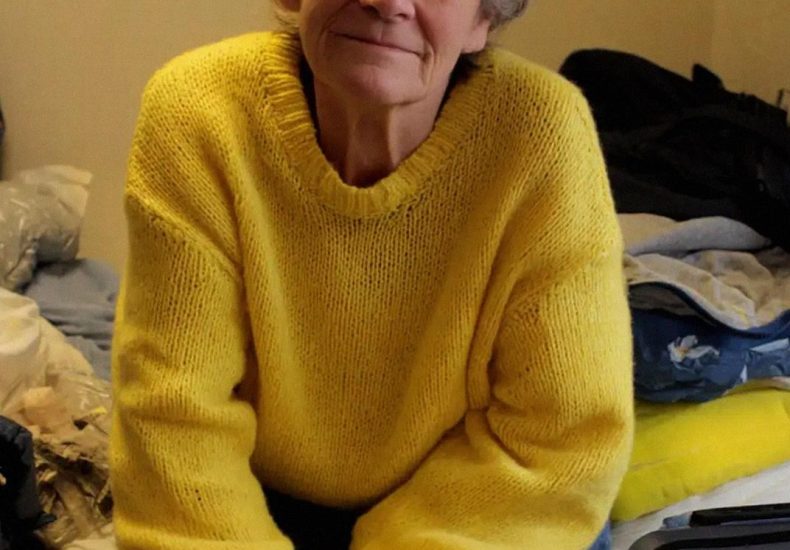
The Night My Son Finally Saw the Truth
I never imagined that needing help would turn me into a problem someone wanted to get rid of.
A few months ago, I had hip replacement surgery. The doctor was very clear: I couldn’t live alone for a while. I needed help getting around, someone nearby in case I fell, someone to make sure I was eating and taking my medication on time.
My son, Daniel, didn’t hesitate.
“Mom, come stay with us,” he said. “We have a guest room. You’ll be safer here.”
His wife, Claire, smiled politely when he suggested it. She said all the right things.
“Of course. Family takes care of family.”
But I could feel it—right away. The stiffness. The forced kindness. The way her smile never quite reached her eyes.
Still, I tried my best. I didn’t want to be a source of tension. I kept my things neat. I stayed in the guest room. I apologized for everything—asking for help, walking too slowly, even existing in the shared space.
Daniel left for a three-day business trip about a week after I moved in.
That’s when everything changed.
The first morning he was gone, I woke up thirsty. My hip ached badly, and I couldn’t safely walk downstairs on my own. So I called out softly from my room.
“Claire, dear? Could you bring me a glass of water?”
There was a long pause.
Then she appeared in the doorway, arms crossed, eyes sharp.
“How much longer are you planning to be a burden in our lives?” she snapped.
I felt my chest tighten.
“I’m so sorry,” I said quietly. “I didn’t mean to cause trouble. I just—”
She cut me off with a laugh. Not a kind one.
“Oh, don’t whine,” she said. “Daniel needs to focus on me. Not some woman taking up space in his life.”
I didn’t sleep that night.
The next day, she barely spoke to me. By the following morning, she walked into my room with a suitcase.
“Get dressed,” she said. “We’re leaving.”
I was confused and frightened. I asked where we were going.
She drove me across town and stopped in front of a homeless shelter.
“This is temporary,” she said coldly, unloading my bag onto the sidewalk. “Daniel doesn’t need to know about this. You wouldn’t want to upset him, would you?”
My hands were shaking so badly I could barely hold my cane.
I stayed at that shelter for three days.
Three days of sleeping on a narrow cot with a healing hip. Three days of shame, fear, and disbelief that this was actually my life.
But I still called my son.
I didn’t tell him everything at first. I didn’t want to ruin his trip. I just said I wasn’t at the house anymore.
The moment he landed, he came straight to me.
He didn’t ask questions. He just wrapped his arms around me and said, “I’ve got you, Mom.”
He brought me back to his house that same evening.
And then—this is the part Claire never expected—Daniel didn’t confront her right away.
He went home first.
Claire was sitting at the table, sipping wine like nothing in the world was wrong.
“Oh, hi!” she said brightly. “How was your trip?”
Daniel smiled faintly.
“Not bad,” he said. “But where’s Mom?”
Claire shrugged.
“She went home a few days ago. Said she was feeling better.”
Daniel’s smile disappeared.
“Oh, Claire,” he said calmly. “I almost forgot—I brought you a gift from my trip.”
He placed a small box on the table.
Her eyes lit up.
“Oh! I hope it’s the bracelet I wanted.”
She opened the box.
And screamed.
Inside wasn’t jewelry.
It was a USB drive, neatly labeled, along with printed photos from the shelter—me sitting on a cot, my suitcase beside me, timestamped.
“What is this?!” she shouted.
Daniel’s voice was steady.
“That’s the place you dumped my mother while I was gone.”
Her face went pale.
“I—I was helping her,” she stammered. “She wanted—”
“Stop,” he said quietly. “I talked to the shelter staff. I talked to Mom. I talked to the doctor.”
The room went silent.
“You lied,” he continued. “You abused my trust. And you put my mother—who just had surgery—into danger.”
Claire started crying, saying it was a misunderstanding, that she was stressed, that she didn’t mean it.
Daniel stood up.
“You’re packing tonight,” he said. “And tomorrow, you’re leaving.”
She stared at him, stunned.
“You’re choosing her over me?”
“No,” he said. “I’m choosing decency.”
Claire moved out the next day.
I stayed.
My son set up a recovery space downstairs. He hired a nurse. He made me tea every morning before work.
One evening, as I rested on the couch, he sat beside me and said, “I’m sorry I didn’t see it sooner.”
I took his hand.
“You see it now,” I said. “That’s what matters.”
Sometimes, people think kindness is weakness.
But kindness has limits.
And when those limits are crossed, the truth has a way of making itself heard—no matter how hard someone tries to bury it.
Leave a Reply