Our New Nanny Took My Mom on “Walks” Every Sunday. When I Heard the Doorbell Audio, My Heart Dropped.
We hired Alyssa a few months after my mom’s hip surgery.
My mother is 82—sharp, proud, and stubborn in the way only lifelong independence can create. The surgery went well, but recovery was slow. She needed help with daily tasks and gentle movement, and I needed to work. Bringing in a caregiver felt like the responsible choice, even though it came with guilt.
Alyssa seemed perfect.
She was young, polite, professionally trained. She spoke softly, always smiled, kept notes, followed instructions. My mom liked her right away, which felt like a miracle. Anyone who’s hired help for a parent knows how rare that is.
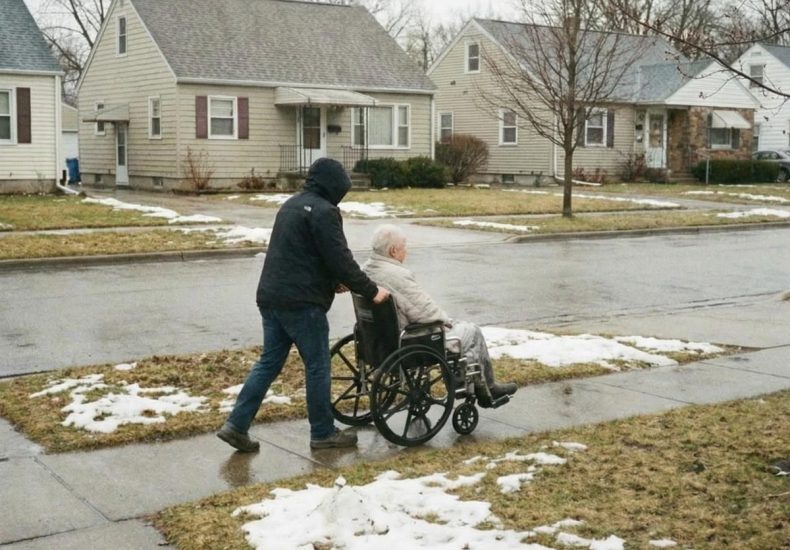
Every Sunday afternoon, Alyssa would take my mom for a short walk around the block. “Good for circulation,” she’d say cheerfully. I liked that she encouraged movement.
But after a few weeks, I noticed something I couldn’t shake.
They’d come back from those walks, and my mom would be… different.
Quiet. Tense. Her shoulders tight. Her eyes glassy, like she’d been holding something back. When I asked how it went, she’d force a small smile and say the same thing every time:
“It was nice, honey.”
Except it wasn’t.
I know my mother. That wasn’t her voice. It was the voice she used when she didn’t want to worry me. When she was lying for what she thought was my own good.
I asked Alyssa once, gently, if everything was okay on their walks.
“Oh yes,” she said easily. “Your mom just gets tired sometimes.”
I wanted to believe her.
Then came one Sunday when they returned earlier than usual.
My mom walked past me without a word and went straight to her bedroom. Her eyes were red. Not tired-red. Crying-red.
That night, after dinner, I opened the doorbell app.
I didn’t even know why I did it. Just a feeling. A quiet nudge in my chest that wouldn’t let me rest.
I played the audio from earlier that afternoon.
At first, there was only wind and footsteps. Then my mother’s voice—low, shaky, barely above a whisper.
“I can’t keep this from my daughter,” she said. “She deserves to know what you told me.”
My heart started pounding.
There was a pause. Long enough that I almost thought the audio had cut out.
Then Alyssa spoke.
Her voice was calm. Too calm.
“You’re not ready to tell her yet,” she said. “She might… react badly. We should wait a little longer.”
My stomach dropped.
Then came the words that made my hands go cold.
“If you tell her now,” Alyssa continued, “it could complicate things. Let’s give it time. For everyone’s sake.”
The audio ended.
I sat there in the dark, staring at my phone, replaying it again and again. My mind raced through possibilities—illness, threats, manipulation, something worse. Why was a caregiver telling my mother to keep secrets from me?
Why did my mother sound afraid?
That night, I barely slept.
The next Sunday, I made a decision.
I told Alyssa she could head home early—that my mom was feeling tired and I’d take over for the afternoon. She smiled, packed her bag, and left without question.
The moment the door closed, I sat down next to my mother.
“Mom,” I said gently, “I need you to tell me the truth. What has Alyssa been saying to you on those walks?”
She stared at her hands for a long time.
Then she started to cry.
Not quiet tears. The kind that come from weeks of holding something in.
“She told me not to tell you,” my mother whispered. “She said it would hurt you.”
I swallowed. “What would?”
My mom looked up at me, eyes full of guilt.
“She told me you were planning to put me in a facility,” she said. “That you were tired. That you wanted your life back.”
The room felt like it tilted.
“What?” I said. “Mom, I would never—”
“She said you were just waiting for the right moment,” my mother continued, voice breaking. “That the walks were to help me adjust. To prepare.”
I felt sick.
Every Sunday walk. Every tense return. Every forced smile.
Alyssa had been planting fear.
“She told me if I said anything,” my mom said softly, “you’d be angry. That you’d think I was confused.”
I held her hands tightly. “Mom, listen to me. That is not true. I have never once thought about sending you away.”
She searched my face, like she was afraid to hope.
“I just didn’t want to be a burden,” she whispered.
That did it.
I hugged her and cried into her shoulder, furious and heartbroken all at once. Furious at Alyssa. Heartbroken that my mother had been carrying that fear alone.
The next morning, I terminated Alyssa’s employment.
Immediately.
No debate. No second chances.
When I told her why, she didn’t argue.
She just said, “I was trying to help her accept reality.”
I reported her to the agency. Submitted the audio. Filed a formal complaint.
The agency later confirmed she’d done something similar with another family—convincing an elderly client that their children were planning to abandon them, positioning herself as the only “safe” person.
She was dismissed.
It’s been months now.
My mom still takes walks—but with me.
Sometimes we don’t even walk. We just sit on the porch and talk. About everything. About nothing.
And every time she looks at me now, I can see the fear is gone.
If I’ve learned anything, it’s this:
Not all danger comes loud.
Sometimes it whispers.
Sometimes it smiles.
And sometimes it wears a name badge and says it’s there to help.
Trust your instincts.
Listen when something feels off.
And never ignore the silence in someone you love—it’s often carrying the loudest truth of all.
Leave a Reply