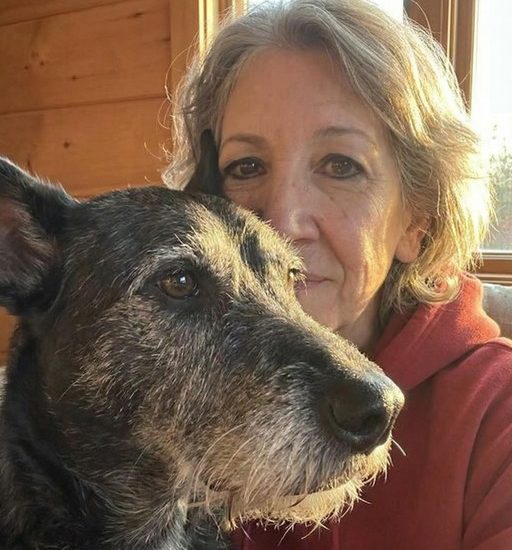
I Adopted the Oldest Shelter Dog, Knowing She Had Only a Month Left
I adopted the oldest dog in the shelter knowing she was expected to live only a few more weeks. I told myself my only goal was to make those weeks gentle, warm, and full of love. I didn’t imagine that kneeling on a cold concrete floor in front of a rusted kennel would quietly crack open parts of my life I’d spent years trying not to look at.
My husband, Daniel Harper, and I had been married for eleven years. On paper, we looked solid. We owned a modest house in a quiet neighborhood. We both had steady jobs. The bills were paid on time. We waved politely at our neighbors when we dragged the trash bins to the curb. From the outside, we looked like a couple who had done everything right.
Inside the house, though, something had been thinning out for a long time.
We spent nearly half our marriage trying to become parents. In the beginning, it felt hopeful—almost exciting. We joked about baby names during long drives. We argued playfully about paint colors for a nursery that didn’t exist yet. We imagined who the child might resemble, whose laugh they’d inherit.
But hope, when stretched too thin, doesn’t stay soft. It sharpens.
Doctor’s appointments piled up. Tests led to more tests. Each visit ended with another carefully worded explanation and another gentle apology from someone who had delivered the same news too many times. Eventually, there were no new options left—just confirmations of what we already knew but couldn’t say out loud.
We couldn’t have children.
We stopped talking about it, not because it hurt less, but because saying it made the loss feel too real, too solid. Daniel buried himself in longer work hours. I filled our weekends with errands we didn’t need and social obligations I didn’t enjoy. We moved around each other politely, like roommates who knew one another’s habits too well to pretend there wasn’t distance.
The house felt hollow. Even sound echoed differently, as if the walls themselves were aware of what was missing.
One evening after dinner, we sat across from each other at the kitchen table. The overhead light flickered faintly. The refrigerator hummed in the background, filling the silence neither of us wanted to break. Daniel pushed his food around his plate without really eating.
“Maybe we should get a dog,” I said, surprising myself with how calm my voice sounded.
He looked up slowly, as if I’d spoken in another language. “A dog?”
“Yes,” I said. “Something alive in the house. Something to take care of.”
He leaned back and crossed his arms. “I don’t want a tiny, noisy thing.”
“That’s fine,” I replied quickly. “It doesn’t have to be.”
After a long pause, he sighed. “All right. We’ll look. But just look.”
That’s how we ended up at the municipal animal shelter on a gray Saturday morning.
The moment we stepped inside, noise rushed toward us. Dogs barked from every direction. Metal kennels rattled as tails thumped against their sides. Some dogs jumped and spun, desperate to be seen. Others pressed their faces through the bars, eyes bright with hope.
And then there was the last kennel, tucked into the far corner.
Inside lay a thin, elderly dog curled tightly against the wall. Her fur was patchy and dull. Her muzzle was frosted white with age. She didn’t bark. She didn’t stand. She didn’t even lift her head when we stopped in front of her. Only her eyes moved, following me with a quiet awareness that made my chest ache.
I knelt without thinking.
Her name tag read: Daisy. Twelve years old. Multiple health conditions. Hospice adoption only.
I felt Daniel stiffen beside me. “No,” he said immediately. “Absolutely not.”
“She’s so quiet,” I whispered.
“She’s dying,” he snapped. “We are not signing up to watch that.”
Daisy shifted slightly. Her tail tapped the floor once—slow, deliberate, as if the movement cost her something. It was such a small gesture, but it felt like a hand reaching out.
“She needs a home,” I said.
Daniel let out a humorless laugh. “She needs a veterinarian and a miracle. Not us.”
I turned to him. “I can make her comfortable. I can make her happy.”
His expression hardened. “If you bring that dog home, I’m leaving. I’m not going to sit around while you pour yourself into caring for something that’s already gone.”
I stared at him, waiting for anger to soften into reason. It didn’t.
“It’s her or me,” he said flatly.
I didn’t answer right away. Instead, I reached through the bars and rested my fingers on Daisy’s paw. Her skin was warm. She pressed back, just slightly.
Something in my chest made a quiet, final decision.
“I’ll sign the papers,” I said.
Daniel didn’t argue. He just turned and walked out.
The shelter worker spoke gently, explaining medications, timelines, expectations. “She might surprise you,” she said, though her tone suggested she didn’t expect it. “But even if she doesn’t, you’ll be giving her something she’s never really had.”
I carried Daisy out wrapped in a donated blanket. She was lighter than I expected.
The house felt different the moment we walked in. Daisy explored slowly, pausing often to rest. I set up a bed near the living room window where sunlight spilled in during the afternoon. She sighed when she lay down, the kind of deep, relieved sigh that sounded like gratitude.
That first night, she slept with her head on my foot.
Daniel packed a suitcase and left the next morning. He didn’t yell. He didn’t cry. He said, “I can’t do this,” and closed the door behind him.
In the days that followed, Daisy and I found a rhythm. Morning medications wrapped in peanut butter. Short walks down the block where she sniffed every blade of grass like it was new. Afternoon naps in warm patches of light. I talked to her constantly—about my job, about the weather, about nothing at all.
She listened.
Weeks passed. Then another.
Daisy didn’t decline the way everyone expected her to. Her appetite improved. Her eyes grew brighter. She wagged her tail more often, sometimes when I laughed, sometimes for no reason at all.
Three months later, the vet shook her head in disbelief. “I don’t understand it,” she said. “But she’s stable.”
Daniel called once, late at night. “How’s the dog?” he asked.
“She’s doing well,” I said.
There was a long pause. “I miss you,” he admitted.
“I know,” I replied. And I did. But I also knew something had shifted. Daisy had taught me how to show up fully, without fear of loss deciding my choices.
A year later, Daisy still slept by the window. Her steps were slower, her hearing weaker, but she greeted every morning like it mattered.
On her last day, I lay on the floor beside her, my hand resting on her chest, feeling the steady rhythm gradually slow. When she finally went, it was peaceful. She wasn’t alone.
Afterward, the house felt quiet again—but not hollow. It felt full of something gentle and real.
Daniel and I eventually divorced. There was sadness, yes, but no bitterness. We had grown in different directions.
I adopted another senior dog a few months later. Then another.
People sometimes ask why I choose the old ones. The sick ones. The ones no one else wants.
I tell them the truth.
Because love doesn’t have to be forever to be life-changing. Sometimes, all it needs is a little time—and the courage to stay when it would be easier to walk away.
Leave a Reply