My Elderly Neighbor Kept Bringing Me Horrible Dishes — But What Her Husband Whispered Made My Stomach Drop
I’m 37, and the past year has been the hardest of my life.
My husband left me for a younger woman. Shortly after, I was laid off. Within months, my savings were gone, and with them, any sense of purpose I thought I had.
So I ran.
I rented a tiny cedar cabin in a quiet Vermont town, tucked between tall pines and winding dirt roads. I planned to sit in silence, read books I never had time for, cry when I needed to, maybe even knit. I wanted to disappear for a while.
That was until my elderly neighbors, Evelyn and George, made it their personal mission to visit me constantly.
At first, it was genuinely sweet. After everything I’d been through, having someone knock on my door just to check in felt like a small miracle. Evelyn would smile warmly, George would nod politely, and they’d ask how I was settling in.
But there was one tiny detail that made the whole situation far more complicated.
Evelyn’s cooking.
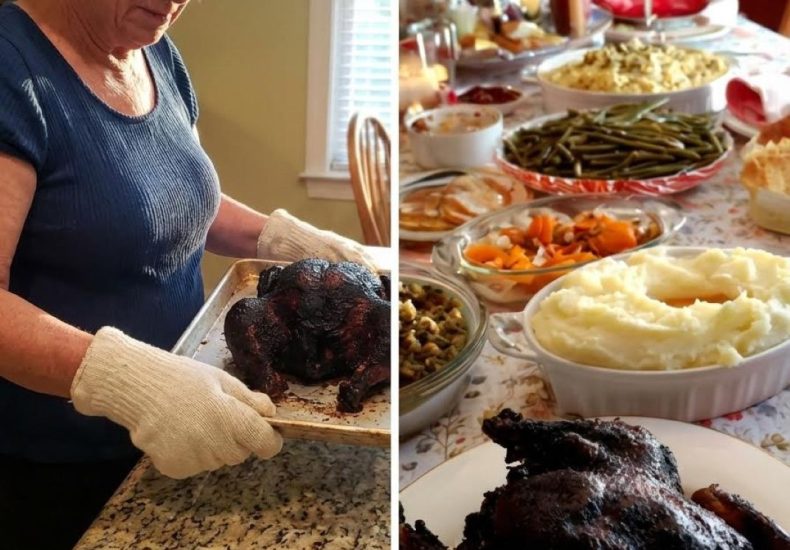
Sweet lasagna with sour sauce. Meat so dry it could double as construction material. Pancakes burned to pure charcoal. Evelyn experimented constantly and always brought her creations over for me to try.
And I did try them.
I couldn’t tell her the food was terrible. Every time she handed me a dish, she looked so proud—like feeding me was her life’s purpose. I just couldn’t bring myself to say a word.
So I smiled politely, forced down a bite or two, and counted the seconds until she left so I could discreetly spit out whatever I’d just eaten.
One afternoon, after she dropped off a plate of chicken that tasted like it had been seasoned exclusively with regret, I waited until I was sure she’d gone home. Then I stepped into my backyard, plate in hand.
The chicken was indescribably bad, so I didn’t feel too guilty about tossing it.
At least—not until I heard a soft cough behind me.
I turned around.
George was standing there, watching me.
His voice was low when he spoke, but his words made the hair on the back of my neck stand up.
“Miss,” he said quietly. “Put that down. Right now. Trust me. You have no idea who you’re dealing with.” ⬇️
The Warning I Didn’t Understand
My hand froze mid-air, the plate tilting dangerously.
“I—what?” I stammered.
George took a step closer, his eyes darting toward the tree line that separated our properties. He looked nervous. No—afraid.
“She watches,” he whispered. “Always has.”
My heart began to pound. “George, it’s just food. I didn’t want to hurt her feelings.”
“That’s not why,” he said sharply. Then, softer, almost pleading, “Please. Put it back.”
Confused and shaken, I slowly returned the chicken to the plate and nodded. George exhaled like he’d been holding his breath for years.
“She won’t mean to,” he added. “But if she thinks you don’t appreciate it… well. She doesn’t handle rejection.”
Before I could ask what he meant, George turned and walked away, shoulders hunched, disappearing into the trees.
That night, I didn’t sleep.
Things Started to Feel… Wrong
After that, Evelyn’s visits increased.
Sometimes twice a day.
She’d bring soups, casseroles, pies—always watching me closely as I took my first bite. Her smile would stretch just a little too wide, her eyes lingering on my face like she was searching for something specific.
Approval.
Gratitude.
Obedience.
George was always nearby, quiet and tense, rarely meeting my eyes.
I started forcing myself to eat more. My stomach protested. My body felt constantly off—heavy, sluggish, nauseous. I told myself it was stress.
But then I noticed something else.
Whenever I praised the food—really praised it—Evelyn relaxed. When I hesitated, even for a second, her mood darkened.
Once, when I said I wasn’t very hungry, she didn’t speak for the rest of the visit.
The next day, she brought a dish twice the size.
The Truth Comes Out
One evening, I heard a knock long after sunset.
It was George. Alone.
“I shouldn’t be here,” he said, voice trembling. “But I can’t let this continue.”
He told me everything.
Years ago, Evelyn had lost their only child. Cooking became her way of coping—of caring, of keeping people close. Anyone who accepted her food became part of her world.
Anyone who rejected it… left.
Sometimes quietly. Sometimes not.
“She doesn’t poison people,” George said quickly. “Not intentionally. But she experiments. Adds things she shouldn’t. If someone gets sick, she convinces herself it’s their fault for not appreciating her effort.”
My stomach twisted.
“She needs to feel needed,” he continued. “And she thinks you need her. Desperately.”
I did.
That was the worst part.
Finding a Way Out
The next morning, I invited Evelyn over.
I thanked her—for everything. The visits. The care. The food.
Then I told her the truth.
Not that the food was bad—but that I was leaving.
I said I’d been offered a job back in the city. That I needed to start over again, somewhere else. I said she’d helped me more than she’d ever know.
Her smile faltered.
George reached for her hand.
For a long moment, she said nothing.
Then she nodded.
“I knew you wouldn’t stay forever,” she said softly. “But I’m glad I got to feed you while I could.”
The Aftermath
I left Vermont a week later.
I didn’t take any leftovers.
Months passed. I rebuilt my life slowly—found work, found purpose, found myself again.
Sometimes I still think about Evelyn and George. About loneliness. About how love, when twisted by grief, can become something frightening.
And about how close I came to ignoring a warning that could’ve cost me everything.
Because sometimes, the scariest thing isn’t malice.
It’s someone who loves you just a little too much.
Leave a Reply