My MIL Changed the Locks and Kicked Me and My Kids Out After My Husband Died — That Was Her Biggest Mistake
When I married Ryan, I knew his mother, Margaret, despised me.
She never hid it.
To her, I was a gold-digger—an outsider who had slipped into her son’s life with baggage she refused to accept. Worst of all, she never acknowledged my children—my five-year-old daughter and seven-year-old son—as her grandchildren.
She called them “those kids.”
Ryan, though, loved us fiercely.
He bought us a beautiful home, insisted my children call him Dad, and made sure they never felt like they didn’t belong. He promised me, again and again, that his mother would never interfere in our lives.
And for a while, she didn’t.
She stayed distant. Cold. Silent.
Then tragedy struck.
Ryan died in a car accident on a rainy Tuesday morning. One moment I was packing lunches, the next I was sitting in a hospital hallway that smelled like disinfectant and grief, being told my husband wasn’t coming home.
I shattered.
My kids lost the only real father they had ever known. My daughter stopped sleeping through the night. My son started flinching every time the phone rang.
We were barely holding ourselves together.
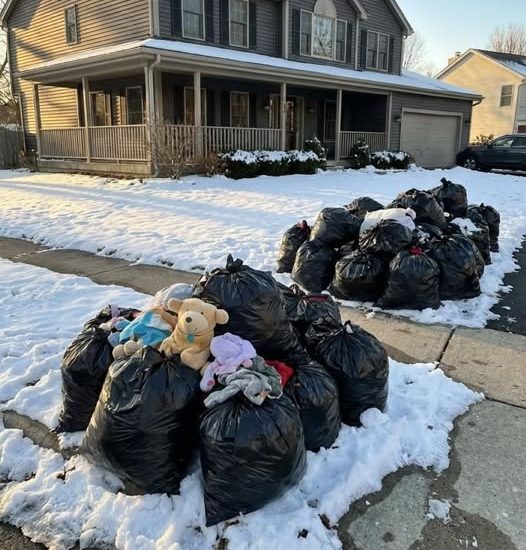
And then—two days after Ryan’s funeral—I came home from running errands to find our lives dumped on the curb.
Our clothes.
My kids’ backpacks.
Photo albums.
Ryan’s jackets.
Stuffed into black trash bags like garbage.
For a moment, my brain refused to understand what I was seeing.
Then panic hit like a wave.
I ran to the front door.
Locked.
I banged. Nothing.
Then the door swung open.
Margaret stood there, perfectly composed, arms crossed, lips curled in a thin smile.
“Oh, you’re back,” she said coolly. “I thought you’d take the hint.”
My heart started pounding.
“This house is mine now,” she continued. “You and your little brats need to go.”
My blood ran cold.
“Margaret,” I said, my voice shaking, “this is my home.”
She scoffed.
“It was my son’s. Now that he’s gone? You have no right to it.”
My hands curled into fists as my children clung to my legs, trembling.
“You can’t do this,” I whispered.
“Oh, I already did,” she replied. “And if you know what’s good for you, you’ll leave quietly.”
She slammed the door in my face.
That night, we slept in my car.
The kids cried themselves to sleep in the backseat, wrapped in coats, while I sat in the driver’s seat staring straight ahead, my jaw locked so tight it hurt.
I wanted to scream.
But more than that, I wanted justice.
And Margaret had made one fatal mistake.
She thought I was powerless.
The next morning, I dropped my kids off at school wearing the same clothes from the day before. I smiled for the teachers. Kissed my kids. Told them Mommy would fix everything.
Then I went straight to Ryan’s office.
He’d always been meticulous. Organized. Prepared.
In the bottom drawer of his filing cabinet, beneath old warranties and manuals, I found it.
A thick envelope labeled: “In Case of Emergency.”
My hands shook as I opened it.
Inside were copies of the house deed.
Ryan’s will.
And a handwritten letter addressed to me.
My love,
If you’re reading this, something has happened to me. First, I’m sorry. I wanted to protect you from my mother as long as I could.
The house is in your name. Not mine. Not hers.
She knows this. She just hopes you don’t.
Do not let her bully you. Call the lawyer whose card is attached.
I love you. Take care of our kids.
— Ryan
I collapsed into the chair and sobbed.
Then I wiped my face.
And I dialed the number.
By noon, I had met with Ryan’s lawyer.
By three o’clock, the police were involved.
By sunset, Margaret’s world began to unravel.
The next morning, we returned to the house.
This time, we didn’t knock.
A police officer stood beside me as the locksmith changed the locks—again.
Margaret arrived just as the final turn clicked into place.
She stormed up the driveway, her face twisted in rage.
“What is this?” she shrieked. “This is MY HOUSE!”
The officer stepped forward.
“Ma’am, this property legally belongs to Mrs. Carter. You changed the locks illegally and disposed of her belongings.”
Margaret’s face drained of color.
“That’s not possible,” she stammered. “My son owned this house!”
I held up the documents.
“No,” I said calmly. “He made sure I did.”
She looked at me like she was seeing a stranger.
“You wouldn’t dare,” she whispered.
“Oh,” I replied softly, “I already have.”
She was escorted off the property.
Trespassed.
Humiliated.
But the story didn’t end there.
A week later, I learned Margaret had taken out loans against assets she believed would become hers.
Assets that never did.
She lost her home.
Her savings.
Her carefully curated image.
And when she tried to contact me—crying, apologizing, begging—I didn’t answer.
I didn’t need revenge.
Justice had already spoken.
Today, my kids sleep safely in their beds.
Ryan’s photos still line the hallway.
And every night, when I lock the door, I remember something important:
Grief can break you.
But underestimating a mother protecting her children?
That’s a mistake no one survives twice.
Leave a Reply