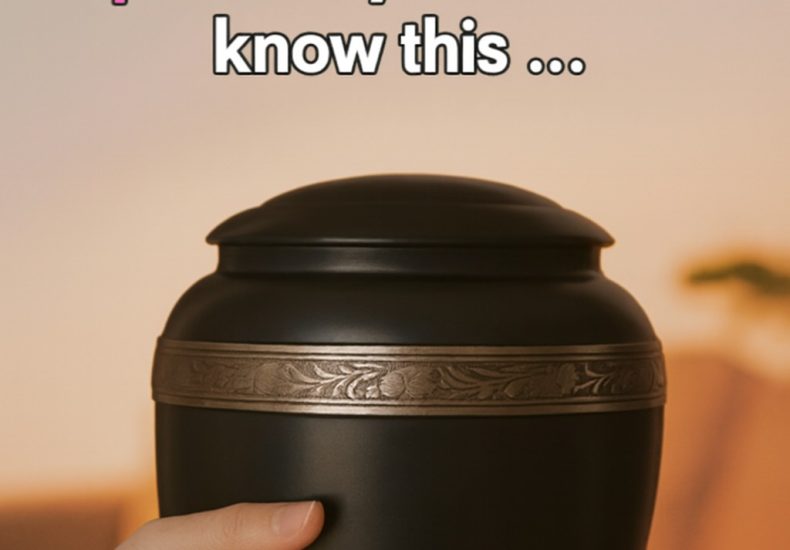
After Receiving the Ashes of a Deceased Loved One, You Should Know This
Losing someone you care about is one of the most emotionally complex experiences in life. And for many families today, cremation has become a common choice. But once the ceremony ends and you finally receive the ashes of your loved one, you may find yourself asking: What now?
Whether the box feels unbearably heavy or strangely comforting, here are the most important things you should know—practical, emotional, and spiritual—after receiving a loved one’s ashes.
1. The Ashes Are Not What Most People Think
Many people imagine cremation ashes as soft, powder-like dust. In reality, they are processed bone fragments—granular, sometimes coarse, and usually light gray or off-white.
This can be a surprise, but understanding it helps you prepare emotionally. What you’re holding isn’t meant to look beautiful—it represents a life, not a material object.
2. The Weight of the Ashes Has Meaning
Adult ashes typically weigh between 4–8 pounds (2–3.5 kg), depending on the person’s size and bone density.
Families often mention how the weight creates a sudden emotional realization:
This is all that’s physically left… and yet the memories feel infinite.
The heaviness isn’t just physical—it’s symbolic.
3. You Don’t Have to Decide What to Do Right Away
There is no deadline, no rule, and no expectation.
You can:
- Keep the ashes at home
- Place them in a columbarium
- Scatter them somewhere meaningful
- Divide them among family
- Turn them into jewelry, art, or keepsakes
Take your time. Grief doesn’t run on a schedule.
4. There Are Legal Rules About Scattering Ashes
Scattering laws vary depending on your location, but generally:
- Private property: You need the owner’s permission.
- Public parks or forests: Some require permits.
- Lakes, rivers, or the ocean: Allowed in most areas, but rules still apply.
- National parks: Usually permitted only with a permit.
Breaking the rules can result in fines—something no grieving family wants to deal with.
5. Ashes Can Be Split Without Meaning Lost
Some people worry that dividing the ashes is disrespectful. It’s not.
Families often share them so each person can honor their loved one in their own way.
You can even request small portions for keepsakes, necklaces, rings, or memorial trees.
6. The Container Is Important
Ashes are typically returned in a simple plastic or cardboard container.
If you plan to keep them:
- Choose a durable urn
- Make sure it is properly sealed
- Keep it away from moisture and high heat
If you plan to bury them, make sure the urn is biodegradable or cemetery-approved.
7. It’s Normal to Have Unexpected Emotions
People experience:
- Guilt
- Relief
- Shock
- Sadness
- Peace
- Connection
All emotions are valid. Some people feel nothing at first—others break down the moment they touch the urn. There is no “correct” reaction.
8. You Can Hold a Private Ceremony at Any Time
You might feel like you didn’t get proper closure.
Receiving the ashes can be a chance to create your own moment:
- Light candles
- Play their favorite song
- Tell stories
- Pray
- Sit in silence
A simple, personal ritual can be more healing than a formal service.
9. Ashes Don’t Contain DNA in Most Cases
After cremation at high temperatures, DNA is usually destroyed.
This means ashes typically can’t be used for:
- DNA testing
- Paternity tests
- Genealogy research
If DNA matters, you must request a sample before the cremation.
10. What You Keep Is Not Just Ash—it’s Love
The ashes are symbolic.
They’re a reminder of a life lived, a presence felt, and a bond that isn’t broken by physical absence.
Many people find comfort in knowing:
- The ashes don’t define the person
- They don’t trap the soul
- They don’t limit your ability to remember them
- Love continues in your memories, actions, and heart
What you carry forward is much more than what fits in an urn.
Final Thoughts
Receiving ashes is one of the most intimate moments in the grieving process. It can feel overwhelming or strangely peaceful. But remember:
You’re not holding the person you lost—you’re holding a symbol of their life, their love, and your connection. What you do next should bring you comfort, not pressure.
Take your time. Honor them in your own way.
And most importantly, allow yourself to feel whatever comes—because that is part of healing.
Leave a Reply