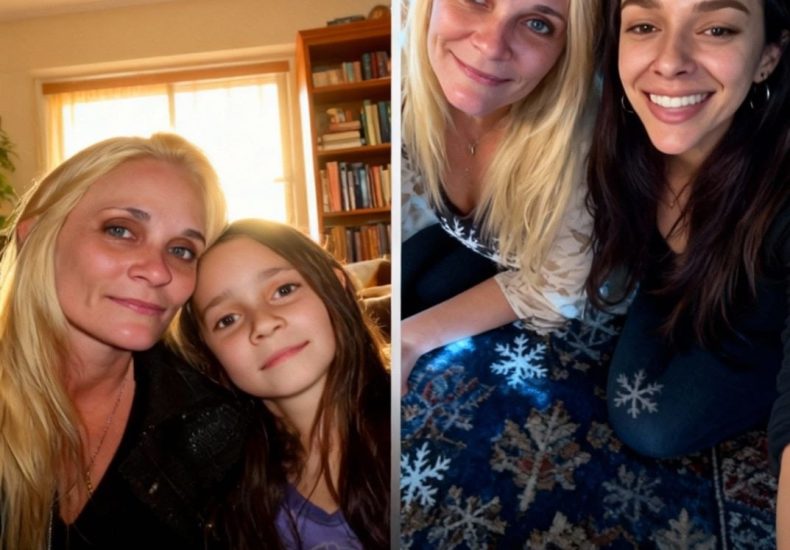
My Parents Chose New Paths and I Was Raised by My Aunt — Years Later, They Returned
I was ten when I realized my parents didn’t want me anymore.
Not because I’d done anything wrong — but because they simply moved on after their divorce.
Dad married his former mistress, and overnight he built himself a “real family.”
Mom remarried a man who openly said he didn’t want “extra kids,” and after she had my half-sister, her attention faded from me too.
One night, I heard them debating who had to take me.
My stepmom murmured, “She doesn’t even fit in here.”
My mom whispered back, “I can’t handle two kids.”
Later that evening, Mom sat me at the kitchen table. Her hands shook as she forced a smile.
“Honey… it might be better if you stay with Aunt Carol for a while.”
A while became forever.
They shoved my belongings into three plastic bags and drove me to Aunt Carol’s tiny yellow house.
Aunt Carol thought I was staying for a weekend.
Instead, she got me for life.
She wrapped me in a hug, made grilled cheese, tucked me into bed, and told me,
“You are a blessing, not a burden.”
She had no children of her own, yet she raised me fully.
She cheered at school events, saved overtime money to buy me art supplies, and hung my drawings proudly in her hallway like they were masterpieces.
My parents? No birthday celebrations.
No visits.
No pride.
No love.
Sometimes a generic holiday card arrived, but mostly… nothing.
Aunt Carol became my entire world.
And at 22, everything changed.
I entered an international art contest — and shockingly won.
The prize was $250,000 and worldwide recognition. Newspapers, interviews, galleries — everything I’d ever dreamed of.
Two days later, my parents suddenly appeared at my workplace like characters in a bad sitcom reunion.
Mom rushed in with tears:
“Sweetheart! I’ve prayed for this moment!”
Dad stood beside her wearing a rehearsed, fatherly smile:
“It’s time to be a family again.”
Then Mom added quietly,
“My car is breaking down… maybe you could help?”
Dad chimed in without shame,
“We’re looking for a condo. Your sister needs more room.”
And suddenly it all made sense.
They didn’t want me.
They wanted my money.
I put my fork down, looked at both of them, and said,
“Fine. I’ll help you… but on ONE condition.”
They leaned in eagerly, already imagining checks, gifts, and condos.
I continued, “We’re having a family dinner first. All of us. At Aunt Carol’s house.”
They hesitated — both stiffened — but they agreed.
Money has a way of making people flexible.
THE DINNER
Aunt Carol was confused when I told her we were having guests.
She never asked questions; she just smiled nervously and cooked a full meal.
When Mom and Dad arrived, they acted like strangers walking into a charity event.
They complimented the house in backhanded ways.
They looked at Carol the way people look at someone who isn’t “important enough.”
We sat at the table.
Mom began, “Honey, we’re just so proud of you. And we’re hoping—”
I raised my hand, stopping her.
“Before anything,” I said, “I want to acknowledge the woman who raised me.”
Aunt Carol froze, uncomfortable with attention.
I stood up, lifted my glass, and said clearly:
“To the woman who fed me, clothed me, protected me, loved me, and believed in me.
To the woman who showed up at every event, who worked overtime so I could paint, who made me feel wanted when others didn’t.”
Carol’s eyes filled with tears.
My parents shifted uneasily.
I continued, louder this time:
“To my REAL mother.”
Mom’s jaw dropped. Dad straightened in his chair.
I wasn’t done.
“You two didn’t raise me. You abandoned me. You debated who had to take me. You dropped me off like unwanted luggage. And now that I have money… suddenly you want to be a family?”
Mom sputtered, “That’s not fair—”
“Oh, it’s perfectly fair,” I said. “Because I have ONE condition for helping you.”
They leaned forward.
I pointed toward the door.
“You apologize to her. Right now. For what you did to us.”
Mom’s face twisted. Dad looked offended.
Carol whispered, “Honey, don’t—”
But I shook my head.
“No. They don’t get to demand love without accountability.”
Dad scoffed.
Mom crossed her arms.
Neither of them apologized.
So I smiled and said:
“Then there will be no money. No condo. No car. No relationship.”
Mom gasped. Dad stammered.
But I was already standing and helping Aunt Carol up.
I walked them to the door — and as they stepped outside, I finished:
“You lost me once.
You don’t get to lose me again.
This time… I’m choosing who my family is.”
THE AFTERMATH
Word spread quickly through relatives.
Mom and Dad painted me as ungrateful.
But people knew the truth — especially those who had watched Aunt Carol raise me alone.
A month later, I bought Aunt Carol a small house with a garden, a sunroom, and a studio for me to paint in whenever I visited. She cried for an hour, apologizing because she felt she didn’t deserve it.
But she did.
She deserved everything.
And for the first time in my life, I realized something:
You’re not defined by the people who abandon you.
You’re defined by the people who choose you — and the people you choose back.
Leave a Reply